
When seniors stop driving, many believe their world suddenly shrinks. Understanding how to adapt as driving abilities change with age can make all the difference. There are many transportation options that can offer safer, easier, and more flexible ways to get around without depending on a car.
Your Prescriptions Sorted and Delivered
These options make it possible to get to appointments, visit friends, and run errands without the stress of feeling anxious behind the wheel, and without the hassles of dealing with traffic or finding parking. The best part about these alternatives is that they don’t just replace driving; they can actually enhance the experience. So, what transportation options are out there?
Alternative Transportation Choices for Seniors
There are plenty of ways to get around without driving. These include:
1. Rideshare Services
Rideshare apps are an easy and convenient way to hire car service. Unlike traditional methods that require you to identify a reputable company, make a phone call, and schedule a driver, all you need to do is download and open an app, enter an address, and a driver will meet you at your door or a designated pickup area. On-demand rides are flexible, quick, and tend to be cheaper than traditional taxi or cab services, which makes them great for errands, appointments, or short trips.
Uber and Lyft are two of the most well-known and are available in most U.S. cities. They make personal transportation easier for seniors by offering simplified user accounts, real-time ride tracking that can be shared with family members, and built-in caregiver support for booking rides. Importantly, they offer additional safety features, including trip tracking, driver ratings, rider verification, and the ability to share ride details with loved ones, which can help seniors feel more secure.
However, rideshare apps are not without their challenges. They require the use of smartphones and applications, which can create a technology barrier for some seniors. Small text, low contrast, or cluttered interfaces on some devices can also make it challenging to verify driver details, pricing, or arrival information. Variability in vehicles and drivers can also make some older adults uneasy about getting into a car with a stranger, or cause physical difficulties getting in and out of certain types of vehicles. Finally, inconsistencies in drivers, pickup experiences, and pricing can cause confusion for some seniors.
2. Senior Transportation Programs
Senior transportation programs are built with older age groups in mind and are often easier and more comfortable than other public options. These rides are typically available for medical appointments, social engagements, or other daily needs. Also, many of the drivers are trained to understand the needs of older adults, giving a more consistent experience than traditional taxi or car services or more modern rideshare options.
Because of this, you can expect a little more patience, steadier hands, and a smoother ride and overall experience. Examples of these programs include local Area Agency on Aging transportation services, city-sponsored senior shuttle programs, and nonprofit services like Independent Transportation Network.
While these programs are often subsidized and can have much lower costs than individual, personal services like taxis, cabs, and rideshare programs, they rely heavily on local funding and infrastructure. Therefore, smaller or more rural communities may have limited options, and the transportation services provided may have eligibility requirements, coverage constraints, and require advance reservations or follow scheduled routes, rather than on-demand service.
3. Public Transportation

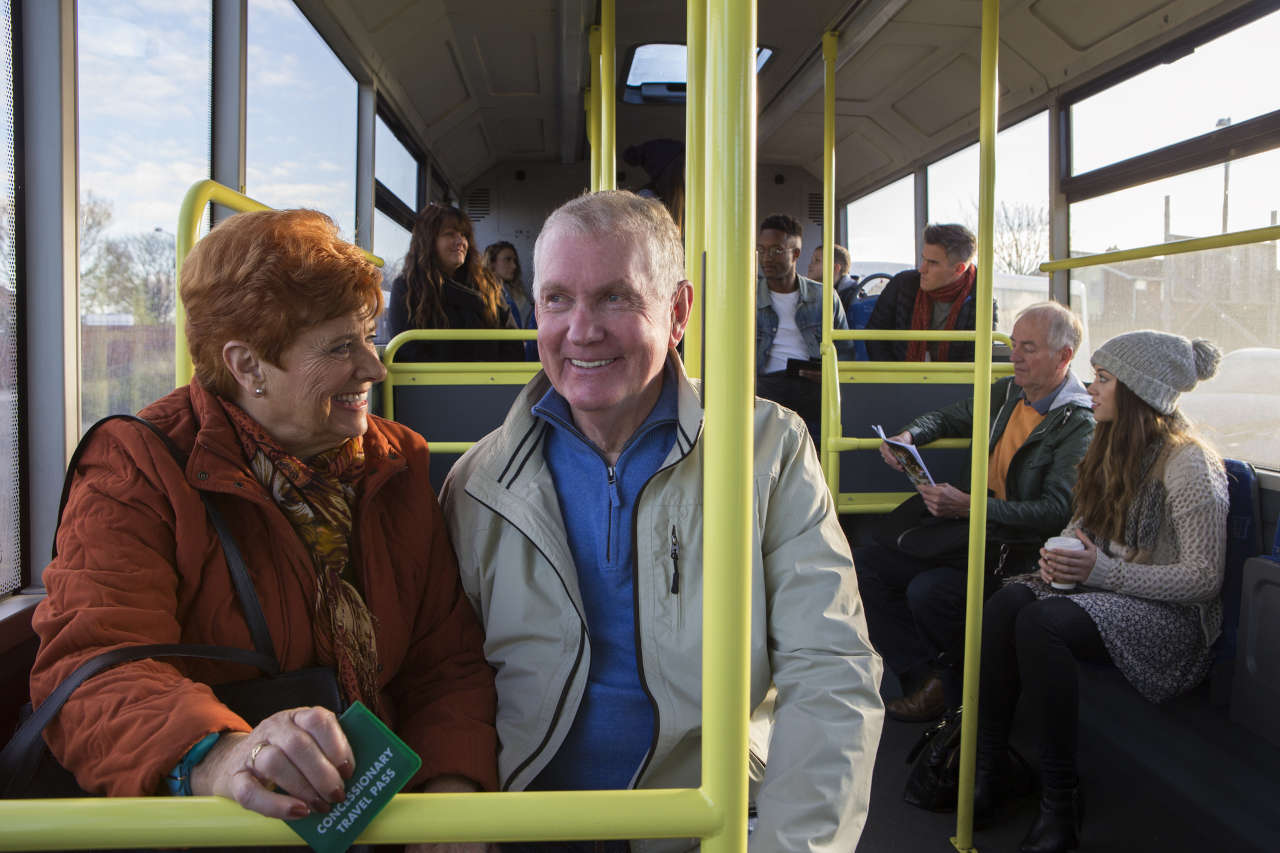
Public transportation, such as buses and trains, is perhaps the most affordable and widely available transportation option. Most public transit today is designed with accessibility in mind, and buses typically offer wheelchair ramps or lifts, low-priority floor entry, and priority seating for seniors. Subterranean trains often have elevators to access the boarding platforms, and most public transit drivers are generally trained to assist riders who need extra time or support boarding.
Buses and trains operate on fixed routes and schedules, so planning ahead is essential to confirm arrival times and the specific destinations they serve. They may also take longer to reach their destination due to frequent stops. As with any public space, comfort and safety can vary by neighborhood, time of day, and transit system. Many older adults feel most comfortable traveling during daylight hours or when routes are busy and well-staffed.
Despite these considerations, public transportation can remain a reliable, low-cost way to travel independently without relying on family, friends, or rideshare services.
4. Paratransit Services
If public transportation doesn’t fully meet your mobility requirements, paratransit may be a solution. Instead of climbing stairs, squeezing onto crowded buses, or squeezing into confined spaces, you will have your own vehicle that will be at your doorstep upon arrival. Call ahead to arrange your ride, and the driver will take you exactly where you need to go. It’s door-to-door transportation with wheelchair access, making everything easier, safer, and more predictable.
Paratransit is generally reserved for individuals who cannot use fixed-route public transit and may require proof of disability or mobility limitations and proof of residency. Some services require you to fill out an application and provide documentation from your doctor or healthcare provider to verify eligibility. Once approved, paratransit can offer reliable, door-to-door transportation designed to support your independence.
Medbox: Never Sort Medications Again
5. Family or Caregiver Rides
Sometimes the simplest solution may be to ride with a person who already knows you best. The most common choice of transportation for seniors is their friends and family members, including their children or live-in companions. Being driven by a family member or caregiver ensures flexibility, comfort, and a person who is familiar with your lifestyle.
This arrangement means you can easily plan outings together, run errands, or make it to your important appointments without having to stress over directions or parking. Travel time also creates a chance for you and your loved one to catch up during the drive. However, it’s important to remember that family and friends may not always be available at the exact times you need them, especially if they juggle work, childcare, or other responsibilities. Coordinating schedules can take a bit of planning, and some older adults may feel hesitant to ask for frequent rides.
Even so, riding with a trusted companion remains a valuable and supportive option: one that blends transportation with connection, shared time, and emotional support.
6. Volunteer Driver Programs
Volunteer driver programs offer a more personal, friendly, and welcoming experience since you are riding with someone who has chosen to volunteer their time to help. After scheduling a pickup, a trained volunteer will come to your door and provide you with a ride to your destination, whether it’s a medical appointment, an errand, or a social outing. In some cases, the volunteer can even stay with you during your visit if you need extra assistance.
These programs are typically free or low-cost, and thus can help you save money, which is a plus if you’re experiencing financial hardship. But more importantly, they help you connect with other people who genuinely care about helping.
7. Non-Emergency Medical Transportation
Non-emergency medical transportation (NEMT) is also a great option for medical appointments that don’t require an ambulance or emergency services, but still benefit from safe, supported travel. After scheduling a pickup, a trained driver arrives with a vehicle equipped to meet your mobility needs and will safely drive you to your location.
The transportation staff can also help you get in and out of the vehicle and will ensure you are dropped off as close as possible to your destination. It is also important to confirm that the NEMT provider you choose follows the Americans with Disability Act (ADA). The ADA sets national standards to ensure people with disabilities receive equal access to transportation. An ADA-compliant service will have accessible vehicles, properly trained staff, and policies that protect riders from discrimination.
8. Trains

Train travel may be ideal if you need to travel longer distances without the exhaustion of driving. Once you board and take a seat, you can simply relax without worrying about traffic, parking challenges, or staying focused on the road. Trains also typically offer generous legroom, giving you plenty of space to stretch and stay comfortable throughout your trip.
Many train stations are working on increasing accessibility with elevators, ramps, and staff to assist when needed, making boarding much easier than some may expect. Moreover, trains run on dependable schedules, so planning your journey is a breeze.
Senior Transportation Options: Comparative Ratings
How the Ratings Are Determined
- Cost (5 = Lowest/Free, 1 = Highest/Full Price)
- Convenience (5 = On-Demand/Flexible, 1 = Long Advance Notice/Rigid)
- Accessibility (5 = Door-to-Door/Wheelchair Vehicle, 1 = Minimal Assistance)
| Option | Cost | Convenience | Accessibility | Summary |
| Rideshare Services (Uber/Lyft) | 3 | 5 | 3 (Wheelchair accessibility may vary) | High Convenience, Moderate Cost |
| Senior Transportation Programs | 1 | 3 | 5 | High Accessibility, Low Cost |
| Public Transportation | 5 | 2 | 3 | Low Cost, Low Convenience |
| Paratransit Services | 3 | 3 | 5 | Highest Accessibility, Low Cost |
| Family or Caregiver Rides | 5 (May be free, but cost to driver can be variable) | 4 | 5 | Highest Flexibility and Comfort |
| Volunteer Driver Programs | 5 | 2 | 3 | Low Cost, Requires Planning |
| Non-Emergency Medical Transportation (NEMT) | 2 | 4 | 5 | Highest Accessibility (Medical focus) |
| Trains | 3 | 2 | 3 (Wheelchair accessibility may vary) | Good for Long Distance, Low Flexibility |
Sorted Prescriptions | Only Pay Your Copays
Conclusion
You don’t have to give up your independence just because you give up driving. There are more transportation options than ever that make it easy to go about to meet your daily needs, keep up with social life, or simply stay active on your own terms.
About the Author

Reviewed by Dr. Ryo Sanabria
Dr. Ryo Sanabria, PhD, was born and raised in New York. They received a B.A. and M.A. in biotechnology from CUNY Hunter College, and an M.A., M.Phil., and PhD in Nutrition and Metabolic Sciences from Columbia University. Dr. Sanabria is a professor who currently teaches at the USC Leonard Davis School of Gerontology. Their areas of expertise include gerontology, cell biology, molecular biology, genetics, and nutrition. They are the recipient of many awards and grants and have authored numerous research papers. The most rewarding part of their work is training and mentoring new scientists. Dr. Sanabria is an avid fitness enthusiast, and in their free time, they enjoy marathon running and weight-lifting. Dr. Sanabria's pronouns are they/them/their.
This information is not a substitute for medical advice or treatment. Talk to your doctor or healthcare provider about your medical condition prior to starting any new treatment. MedBox by AmeriPharma assumes no liability whatsoever for the information provided or for any diagnosis or treatment made as a result, nor is it responsible for the reliability of the content. MedBox by AmeriPharma does not operate all the websites/organizations listed here, nor is it responsible for the availability or reliability of their content. These listings do not imply or constitute an endorsement, sponsorship, or recommendation by MedBox by AmeriPharma. This webpage may contain references to brand-name prescription drugs that are trademarks or registered trademarks of pharmaceutical manufacturers not affiliated with MedBox by AmeriPharma.

 English
  Spanish
  Chinese
  Vietnamese