
返回

如何克服关节疼痛保持活力

5 分钟阅读

Matthew Delmonico

已审查

作者:Matthew Delmonico 博士

seniors-walking

Arthritis affects approximately 1 in 5 adults in the United States. Did you know that one of the best treatments for arthritis pain is exercise? 

Medbox:再也不用分拣药物了

开始

This may seem counterintuitive and may even go against what your body is telling you to do. However, when your body is in pain, remaining sedentary can actually exacerbate stiffness and muscle atrophy, which creates a more painful cycle that is difficult to break. 

Moreover, exercise doesn’t have to be vigorous or time-consuming. With the right approach, you can manage your pain, maintain your mobility, and live your life to the fullest every day. Read on to learn seven ways to stay active despite joint pain. 

Important Disclaimer: While exercise is beneficial for joint health, it is essential to tailor your activity to your specific condition. Always consult with your doctor or a physical therapist before starting any new exercise routine to ensure it is safe and appropriate for your level of joint pain and medical history. Listen to your body and never push through sharp or worsening pain.

7 Ways to Stay Active Despite Joint Pain

Here are seven easy ways to stay active, even when your joints ache: 

1. Take Short, Regular Walks

Short, frequent strolls are one of the simplest ways to stay active without overloading your joints. In one controlled trial, researchers compared long-bout to short-bout walking. In each group, overall activity and physical function increased in adults. Participants who took short, frequent strolls, however, found it easier to be consistent without worsening symptoms.

The key takeaway is that you can space activity into shorter, more manageable intervals. Taking three separate 10-minute walks might be better than doing one long 30-minute walk that can leave you too tired to exercise the next day. Find a pace you can handle, rest if you notice an abrupt flare-up of pain, and prioritize frequency of walking sessions over speed.

2. Swim or Do Water Exercises

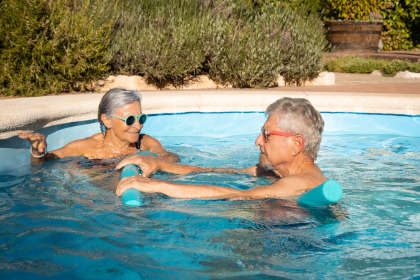
seniors-pool

If walking or standing on land causes too much joint pain, water is a great medium that can help you move with less discomfort. In a systematic review of aquatic exercise for 骨关节炎, researchers found that participating in water-based programs reduced pain and improved physical function and quality of life. 

Study participants also reported less joint loading and increased ability to complete daily activities after a short aquatic exercise program. The buoyancy of water supports the body, allowing you to work on strengthening the muscles surrounding the joint and elevating your heart rate without jarring movements. So, consider a few weekly sessions of gentle aquatic aerobics or pool-based range-of-motion exercises.

3. Practice Gentle or Chair Yoga

Yoga can be suitable for people with arthritis if it’s gentle or done with a chair. 研究 have found that it reduced pain, improved function, and helped people with arthritis feel more capable. Self-confidence matters a lot because you’re more likely to stick with exercise if you think you can do it. 

Yoga poses help with joint range of motion and build the stabilizing muscles. The best part is that you don’t need to take a full-floor class. Here’s a guide for getting started with yoga. Just start slow — 10 to 20 minutes — and focus on your breathing, adjusting your style to protect your sore joints.

4. Use Resistance Bands for Strength

Resistance-band training is a progressive, joint-friendly way to build strength and improve function. But it also helps reduce pain. 

一个 controlled trial that used elastic bands found a significant decrease in pain and improved function after a structured 阻力训练 program. The variable load of bands allows you to control how much weight you lift and the speed with which you lift it, which may make them safer for your joints than heavy free weights. 

Resistance exercises that strengthen the muscles surrounding your knees, hips, and shoulders can also take pressure off those joints and improve your movement. Start with light resistance and do 2–3 sets of 8–12 controlled reps for each major muscle group two to three times a week. 

5. Try Tai Chi for Balance

Tai chi is characterized by slow, gentle movements, shifting your weight from one leg to the other. This precise movement helps with joint pain and balance. A 临床试验 found that 12 weeks of tai chi reduced knee pain from 骨关节炎 and improved physical function. Participants also reported improved self-efficacy and mood. 

Tai chi also emphasizes postural control and gentle strengthening, which can reduce your risk of falling. You don’t need to attend hours-long tai chi classes to start seeing results. Attending twice weekly or even a short daily practice can be a great starting point. 

您的处方分类和交付

了解更多

6. Dance to Your Favorite Music

Dancing is one of the easiest and most enjoyable ways to keep joints moving. It doesn’t matter whether it’s slow dancing or just swaying to the rhythm in your living room. Dancing gets your body moving, and it raises your heart rate without feeling like exercise. The rhythmic movements help you relax, loosen stiff joints, and move with greater ease. 

Dancing can also improve balance and coordination, and help strengthen muscles that support knees, hips, and ankles. There’s no wrong way to dance, as long as you’re moving to the music. You can dance alone, with a partner, or seated; whatever feels convenient for you.

7. Do Light Gardening or Chores

Light gardening or housework is an effective way to keep moving without stressing your joints. Watering plants, dusting, or gently pulling small weeds can help tone muscles and increase your flexibility. It involves different types of movement such as bending, reaching, and stretching. 

Housework also helps improve balance and coordination. The added benefit of this type of physical activity is the immediate results you see in your home and garden from your efforts, keeping you motivated.

结论 

The best thing about exercising for joint pain is that you don’t have to force yourself through a challenging workout. Rather, you can choose simple activities that you enjoy to stay as strong and flexible as possible. Do a little bit every day because consistency is the key. The gradual accumulation of activity helps protect your joints, improves your mood, and helps you do the things you love for longer.

照顾亲人?

分享此资源
你爱的人

Happy Couple

喜欢你看到的东西吗?

添加一些内容
拥有 撰写评论.

阅读评论

发现、联系和参与:订阅我们的时事通讯!

zh_CNChinese